
Negli ultimi anni, il mondo del gioco online ha subito un'evoluzione radicale, trasformandosi in un settore sempre più competitivo, innovativo
Whoa! Seriously? Yeah — I know, browser wallets sound like the same old story. But hear me out. I was poking around testnets and mainnets one slow Sunday, and somethin’ felt off about my usual setup. Initially I thought switching wallets would be a minor nuisance, but then realized that small UX and security choices add up in ways that bite you later.
Here’s the thing. A wallet is more than pretty icons and a seed phrase box. It’s the gatekeeper to your assets, your DeFi reputation, and sometimes your sleep. My instinct said I should try something different after a near-miss with a phishing popup (oh, and by the way—keep that long-press habit on approvals). Really? Yes. So I installed a new extension and spent a week pushing it to the limits.
Hmm… the first impression was crisp. The UI felt deliberate and quick. Medium-paced learning curve. But the security defaults? That’s where Rabby stood out for me. I’ll be honest: I’m biased toward wallets that help the user make better security decisions without nagging, because I’ve seen folks click through warnings too fast. On one hand the market wants simplicity; on the other hand, you need guardrails.
Whoa! Short sentence. The wallet offered clearer permission prompts and a visible approvals manager. Two features I consider very very important when interacting with complex DeFi dApps. Over several sessions I noticed it distinguished between contract approvals and transaction approvals in a way that reduced accidental token approvals. Initially I underestimated that distinction, though actually I shouldn’t have — approvals are where most funds leak if you’re not careful.
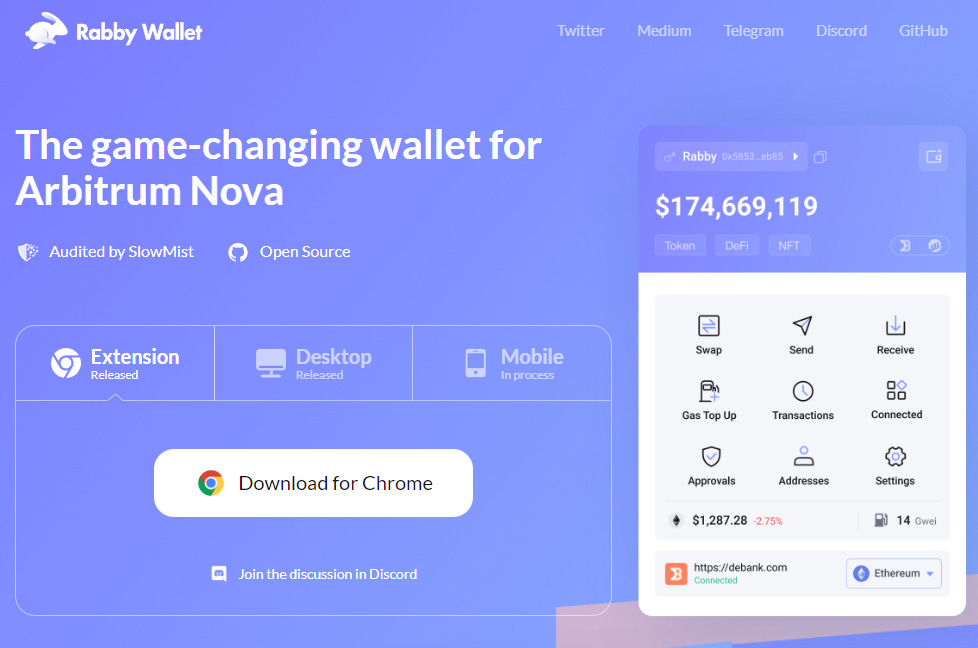
What Rabby Wallet Does Differently
Whoa! Small exclamation but big point. User-centered defaults matter. Rabby wallet gives you per-site isolation, clearer gas controls, and a built-in approvals page that makes it harder to accidentally grant unlimited allowances. Those sound like niche things, but in practice they cut down on risky approvals and surprise transactions. My working-through-it thought was: if the wallet nudges me into safer patterns, I’m less likely to fix a mistake after the fact.
Here’s what bugs me about many wallets: they assume everyone understands ERC-20 allowances and nonce mechanics. That’s not realistic. Rabby shows allowances and lets you revoke them easily, and that small UX improvement saved me an anxious call to support once (true story — I tried to cancel a limit approval and it was a mess before). On the technical side Rabby supports multiple EVM-compatible chains, and it handles custom RPCs pretty gracefully.
Really? Yes. Hardware wallet integration is solid too. I connected a hardware key and it felt like the extension respected the device rather than trying to re-implement key logic—good. This is a big deal for people who split their habits between casual swaps and larger treasury moves. You want the casual stuff to be effortless and the heavy moves to be deliberate and slow.
Whoa! Quick beat. Now, for privacy-minded folks: Rabby doesn’t pretend to be a full privacy layer, but its site isolation and optional connection modes are welcome. On one hand, browser-based wallets are exposed to page scripts; though actually Rabby’s UI makes those exposures more transparent, so you can choose not to connect. Initially I thought that was just marketing copy, but after trying it for a month I kept the manual connection flow and it reduced stray dapp popups.
Okay, so check this out—installation is straightforward. You add the extension, create or restore a wallet, and the setup flow is clean. There’s a subtle educational tone that helps without being preachy. It’s like having a buddy who knows the ropes but doesn’t talk down to you. I’m not 100% sure every new user will read the tooltips, but the choices are there.
Whoa! Brief punch. The approvals manager deserves its own shout-out. It lists token allowances per contract and lets you revoke with one click. That one click has saved me from having to interact with a contract to revoke via Etherscan (yes, that’s a hassle). Longer thought: reducing friction for safer behavior is the whole point—if revocation is easier than finding a revoke interface elsewhere, people will do it more often, and that reduces systemic risk.
Hmm… I tried the gas control presets and the custom gas UI. The presets are sensible but not condescending. The custom UI surfaces max fee, priority fee, and estimated confirmation times, and it handles EIP-1559 gracefully. My working-through-it view changed: initially I avoided custom gas because it felt risky, but after a few guided uses I appreciated the control, especially during congested periods on mainnet when a few gwei made a big difference.
Whoa! Quick note. The chain selector is fast. No lag when switching between Ethereum, Polygon, BSC, and testnets. That matters when you’re hopping between a launchpad and a dex. On the other hand, adding custom chains is a little manual, though actually their UI explains what values you need and why, so even less technical users can do it.
I’ll be honest: I’m biased toward open-source projects. Rabby’s codebase is open, which is a trust signal for me. Does open-source equal secure? Not automatically. But it invites audits, community review, and reproducibility. On several occasions I dug into GitHub issues (yes, really) and found discussions that helped me understand design trade-offs—important for trust.
Whoa! Short emphasis. Security features I appreciate include phishing detection heuristics and a clear way to inspect transaction calldata before signing. Seeing the raw call helps when you’re interacting with vaults or multisig setups. That said, raw calldata is intimidating to newbies, so Rabby mixes readable summaries with the low-level view—balanced approach, and I respect that balance.
Something else: the UX for contract interactions is less noisy. Fewer confusing approval modals. Fewer scary all-caps warnings. It’s calmer, which is better. Calm doesn’t mean lax. My gut said calm often indicates careful design; my analysis confirmed it. There are still edge cases, and I hit one where a dapp assumed MetaMask-specific behavior, but Rabby had fallbacks most of the time.
Whoa! Tiny sentence. There are a few rough edges. For example, mobile browser extension workflows are inherently clunky, and Rabby is no miracle there. I found the mobile-to-desktop bridging fine, but not seamless. I’m not sure who has solved that perfectly yet—maybe no one. Still, for desktop-first DeFi work, Rabby is very capable.
Here’s the practical part: if you want to try it, look up Rabby and follow the installation guide on their site. For convenience I bookmarked a resource earlier—if you’re already convinced and want to install, check out rabby wallet for the official download and setup tips. That link has the steps I liked: clear screenshots, recommended settings, and a short checklist for security.
Whoa! Quick callout. Do audits replace good UX? No. But Rabby’s approach blends both: it shows you the important details without overwhelming. Over time that changes behavior. My small experiment of nudging colleagues to use the approvals page resulted in fewer accidental token allowances—anecdotally positive, though not a rigorous study.
Hmm… If you’re migrating from another extension, expect a few differences. There may be site compatibility quirks. That’s normal when a dapp has implicit expectations about wallet behavior. On the bright side, Rabby tries to be compatible and gives options when it hits a snag, instead of silently failing. I like that transparency.
Whoa! Short again. For power users: plugin support, advanced gas, and hardware signing make Rabby worthy of a daily driver. For casual users: clearer prompts and fewer cryptic choices reduce decision fatigue. On the flip side, some people might prefer the familiarity of larger incumbents—nothing wrong with that, but consider the trade-offs.
Here’s what I wonder: can wallets become better at teaching users without being paternalistic? Rabby moves in that direction by highlighting risky actions and offering immediate remedies. Long thought: if wallet UX continues to prioritize revoke flows, per-site isolation, and readable transaction summaries, then the ecosystem will have fewer “I didn’t know” hacks. That’s hopeful, and it nudges us toward better defaults everywhere.
FAQs
Is Rabby safe to use for mainnet assets?
Short answer: yes, with caveats. It supports hardware wallets, shows approvals, and is open-source—all positives. However, browser extensions have attack surfaces, so follow good practices: use hardware keys for large holdings, revoke allowances when possible, and avoid connecting to sketchy dapps. I’m not 100% risk-free, but these steps reduce exposure.
How is Rabby different from other browser wallets?
Rabby emphasizes safer defaults, clearer approval flows, and better gas controls. It nudges users away from unlimited approvals and makes revocation easy. Pragmatically, that reduces accidental permissions and helps users manage risk without heavy friction. Again, I’m biased toward wallets that teach by doing.
Can I use Rabby with hardware wallets?
Yes. Rabby integrates with common hardware wallets and prefers to defer signing to the device, which is what you want for larger transactions. Connecting is straightforward, though the device interaction depends on your hardware and OS. Also, be mindful of firmware updates and official vendor instructions.
About Author
jasco